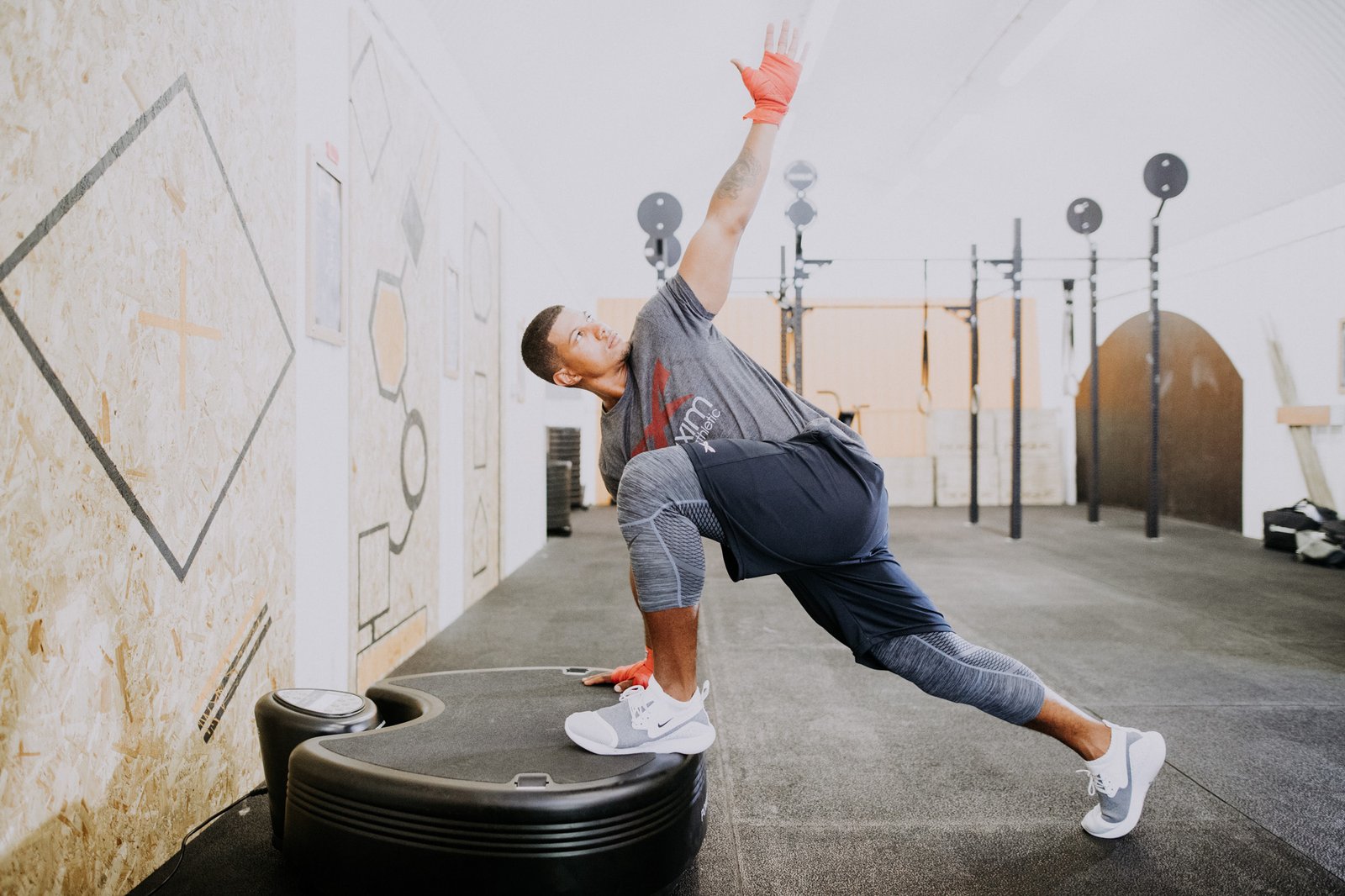
Power Plate is the global leader in Whole Body Vibration (WBV) therapy, and Singapore has become one of Asia’s fastest-growing markets for this technology. A Power Plate platform delivers precision harmonic vibration that triggers up to 50 involuntary muscle contractions per second, training strength, balance, circulation, bone density and recovery at the same time. This guide explains the evidence-based Power Plate Singapore benefits, who it suits, and exactly how to use Whole Body Vibration safely.
In short: Whole Body Vibration therapy uses a vibrating platform to make your muscles contract reflexively many times per second. Power Plate is the original WBV system — used in more than 100 countries, applied by professional sports teams and medical institutions, and supported by over 200 clinical studies.
- Best for: sedentary office workers, active-ageing seniors, post-natal recovery, athletes and rehabilitation.
- Typical session length: 10–20 minutes.
- Recommended frequency: 2–3 sessions per week for most goals.
- Why it works: harmonic, tri-planar vibration amplifies force through Newton’s Second Law (Force = Mass × Acceleration) without heavy external loading.
What Is Power Plate Whole Body Vibration Therapy?
Whole Body Vibration (WBV) therapy uses a vibrating platform to send controlled, harmonic vibrations — typically 25–50 Hz — through the body. Your muscles instinctively contract and relax to maintain balance, a response called the Tonic Vibration Reflex (TVR). Power Plate is the pioneer of this technology, used across fitness, medical rehabilitation and healthy-ageing programmes worldwide.
In Singapore, WBV is used both as a standalone session and as an amplifier layered onto existing training — squats, lunges, push-ups, isometric holds and recovery protocols all become more demanding when performed on the plate.
How Does a Power Plate Actually Work?
The platform creates instability, forcing the nervous system to recruit more muscle fibres to keep you upright. Three mechanisms explain the effect:
- Force = Mass × Acceleration (Newton’s Second Law): increasing acceleration raises the force your muscles must produce — without adding heavy external weight.
- Tri-planar (3D) vibration: Power Plate’s PrecisionWave technology vibrates up/down, front/back and side-to-side, mimicking real-world movement.
- Neuro-myofascial stimulation: vibration excites muscle spindles, mechanoreceptors and connective tissue, driving both reflexive stabilisation (global) and the Rapid Reflex Response (local).
What Is the Difference Between Harmonic and Non-Harmonic Vibration?
Not all vibration is equal. Power Plate uses harmonic (sinusoidal) vibration that is predictable and controlled. Occupational vibration — the kind associated with workplace injury — is irregular, low-frequency and prolonged. The distinction matters for both safety and results.
- Harmonic (Power Plate): predictable sinusoidal waveform, 25–50 Hz, low amplitude (2–4 mm), short controlled exposure — therapeutic and performance-enhancing.
- Non-harmonic (occupational): irregular waveform, 1–20 Hz, erratic amplitude, hours of daily exposure — cumulative stress with injury risk.
Power Plate Singapore Benefits: 9 Evidence-Based Outcomes
Whole Body Vibration influences functional capacity, tissue and metabolic health, and brain health simultaneously. Research links WBV to improvements in cardiorespiratory fitness, muscle mass, bone mineral density, balance, grip strength, circulation, recovery and cognition — making it one of the most efficient tools for healthspan in Singapore.
1. Superior Neuromuscular Activation and Muscle Strength
Vibration increases muscle fibre recruitment, so each movement works harder. Working out on a Power Plate has been shown to activate up to 138% more muscle fibres than the same movement on the ground, and cycling with vibration raised quadriceps EMG activity by 167% (University of Greenwich, Centre for Sports & Human Performance).
- Strength gains: a 24-week WBV programme improved knee-extensor strength by up to 24.4% in untrained females — comparable to resistance training (Roelants et al., 2004).
- Postmenopausal women: WBV plus resistance training produced greater strength gains than resistance training alone (Bemben et al., 2010).
- Explosive power: short-term WBV improved rate of force development and explosive strength (Lamont et al., 2010).
2. Boosts VO₂ Max and Cardiorespiratory Fitness
VO₂ max — maximal oxygen uptake — is one of the strongest predictors of how long and how well you live. WBV increases oxygen consumption during and after exercise across populations and settings, making it an accessible way to raise cardiorespiratory fitness without excessive cardiac strain.
- Higher oxygen uptake: a 30-minute WBV session raised VO₂ by 23% more than the same session without vibration, with effects lasting up to 24 hours (Hazell & Lemon, 2011).
- Faster to threshold: cyclists reached peak VO₂ at 11 minutes with vibration versus 13–14 minutes without (University of Greenwich, 2011, 2022).
- Older adults: a one-year WBV programme improved VO₂ peak and overall cardiorespiratory fitness (Bogaerts et al., 2009).
- Context: cardiorespiratory fitness is a stronger predictor of mortality than smoking, hypertension and diabetes (Mandsager et al., 2018).
3. Increases Muscle Mass and Fights Sarcopenia
Skeletal muscle is a healthspan organ — it drives insulin sensitivity, glucose disposal and independence. Adults lose roughly 30% of peak muscle mass by age 80. WBV helps preserve and build lean tissue, countering sarcopenia (age-related muscle loss) and dynapenia (loss of strength and power).
- Fat-free mass: 24 weeks of WBV increased fat-free mass by ~2.2% in previously untrained women (Roelants et al., 2004).
- Older men: WBV was as effective as conventional fitness training for increasing upper-leg strength and mass (Bogaerts et al., 2007).
- Topical value: skipping the plate is what carries the greater risk — the absence of power and strength training accelerates functional decline.
4. Supports Bone Mineral Density and Osteoporosis Prevention
Bone is living, load-responsive tissue. WBV adds ground-reaction and acceleration load that signals bone to remodel, making it a safe mechanical-loading strategy for osteoporosis and post-menopausal bone loss.
- Hip BMD: a 6-month WBV programme improved hip bone mineral density and muscle strength in postmenopausal women versus controls (Verschueren et al., 2004).
- Femoral neck: after 8 months, WBV increased femoral neck BMD by ~4.3%, outperforming walking, and improved balance (Gusi et al., 2006).
- Pooled evidence: a meta-analysis confirmed significant increases in hip BMD in postmenopausal women (Slatkovska et al., 2010).
- Clinical role: reviews conclude WBV may be a safe, beneficial adjunct for osteoporosis and fracture-risk factors (DadeMatthews et al., 2022).
5. Improves Balance, Stability and Fall Prevention
WBV challenges the postural control system directly, improving balance, functional lower-body strength and stability — the exact qualities that prevent falls. This makes it especially valuable for Singapore’s rapidly ageing population.
- Rehabilitation: WBV improved balance, muscle power and functional lower-body strength in older adults with chronic conditions such as osteoarthritis (Osugi et al., 2014).
- Faster reactions: training on the plate rehearses the reflexive stabilisation the body needs to catch a slip on a wet HDB corridor or MRT platform.
- Power matters: lower-body power declines 2–3× faster than strength with age and is more predictive of physical performance than strength or aerobic capacity (Bean et al., 2002; Skelton et al., 1994).
6. Enhances Grip Strength — The “New Vital Sign”
Grip strength reflects systemic vitality, not just hand function. It correlates with cardiovascular health, cognition and longevity, and is increasingly recognised as a “new vital sign” for healthy ageing (Vaishya et al., 2024). WBV activates the sensory-motor loop that supports grip and postural integrity.
- Mortality link: each 5 kg decrease in grip strength is associated with a 16% higher risk of all-cause mortality (Leong et al., 2015).
- Stroke recovery: WBV plus task-related training significantly improved grip strength and arm function (Lee et al., 2016; Ahn et al., 2019).
- Older adults: WBV enhanced grip strength and physical fitness, positioning it as an alternative to resistance exercise (Chang et al., 2018).
7. Supports Lymphatic Drainage and Blood Circulation
Whole Body Vibration stimulates blood flow and lymphatic circulation, helping flush soft tissue, enhance hydration and deliver oxygen and nutrients to cells. This is why so many Singapore clients use a 5–10 minute WBV “flush” before or after a training session.
- Circulation: WBV increases skin blood flow, supporting nutrient delivery and cellular function (Power Plate research).
- Lymphatic support: periodic muscle pumping from vibration aids lymphatic return — valuable for people who sit for long hours.
- Post-natal context: improved circulation and low-impact loading make WBV a gentle re-entry into movement after childbirth, with medical clearance.
8. Accelerates Recovery and Reduces Muscle Soreness
WBV is used as a recovery tool to reduce delayed-onset muscle soreness (DOMS), lower stress hormones and dampen inflammation. It shifts the body toward resolution and adaptation rather than persistent fatigue.
- Anti-inflammatory signalling: WBV improved anti-inflammatory status and innate immune signalling in older adults (Rodriguez-Miguelez et al., 2015).
- Inflammatory markers: systematic reviews and meta-analyses show WBV can influence CRP and cytokine responses, with outcomes dependent on dose (Moreira-Marconi et al., 2022; Wang et al., 2024).
- Practical use: a low-amplitude recovery protocol (30–40 Hz, 1–2 sets) after training supports soft-tissue flushing and pain reduction.
9. Supports Brain Health, Cognition and Mood
Brain health is a movement issue. WBV shows promising effects on cognitive function, attention, mood and neuroprotection, and it elevates cerebral blood flow and brain-derived neurotrophic factor (BDNF) — a key driver of neuroplasticity.
- Cognition: systematic reviews report WBV can positively influence cognitive function in healthy adults and those with impairment (Wen et al., 2023).
- Attention in 2 minutes: two minutes of passive WBV improved attention and inhibition measured by the Stroop test (Regterschot et al., 2014).
- BDNF and mood: WBV increased BDNF and improved cognitive and clinical outcomes in women with fibromyalgia (Ribeiro et al., 2021).
- Memory: WBV improved gait stability and cognitive performance in Parkinson’s patients (Zhao et al., 2023).
Who Benefits Most from Power Plate WBV in Singapore?
Because intensity is fully adjustable — via frequency (Hz) and amplitude (mm) — WBV suits almost every fitness level. Five groups in Singapore see the most immediate return.
Sedentary Office Workers and Busy Professionals
Long desk hours in the CBD erode posture, circulation and muscle mass. A 15–20 minute Power Plate session delivers the metabolic and strength stimulus of a much longer workout — no sweat required for basic protocols, making it realistic before work, at lunch or after office hours.
Active-Ageing Seniors
WBV supports balance, bone density, mobility and fall prevention at low joint impact, helping older adults in Singapore maintain independence. It is commonly integrated into healthy-ageing and longevity programmes (see the seniors section below).
Post-Natal Recovery
After medical clearance, low-impact WBV helps rebuild circulation, muscle activation and confidence in movement — without the joint stress or high intensity of a traditional return-to-training plan.
Athletes, Runners and Weekend Warriors
Power Plate improves power, rate of force development and recovery. Cyclists, runners and team-sport athletes use it for pre-activation (post-activation potentiation), contrast training and post-session regeneration.
Rehabilitation and Chronic Pain
WBV activates muscles and improves circulation without high impact loading, supporting rehabilitation from injury or surgery and helping modulate pain perception — always within a professional’s scope of practice.
How Many Times a Week Should You Use a Power Plate?
For general fitness and muscle conditioning, most people should use a Power Plate two to three times per week for 10–20 minutes per session. Beginners start with two short sessions to adapt; advanced goals such as power, bone density or cardiovascular fitness can support three to five weekly sessions. Research protocols typically run two to three sessions per week for six weeks to six months.
- Beginner (weeks 1–4): 2 sessions per week, 5–10 minutes, 30 Hz, low amplitude, simple movements.
- General health and strength: 2–3 sessions per week, 10–20 minutes, 30–40 Hz.
- Performance and power: 3–5 sessions per week, using focused protocols — Red Zone (5–10s max effort + 50–55s rest × 5–10), REHIT (20–30s max effort + 2 min rest × 4–6), or VO₂ metabolic strength.
- Recovery sessions: 1–2 short low-amplitude sets after training, and never train to the point of persistent soreness.
Key principle: consistency beats intensity. Power Plate’s Minimum Effective Dose approach is designed to deliver a strong training signal in the shortest possible time, then allow adequate recovery.
Is Whole Body Vibration Suitable for Seniors in Singapore?
Yes — Whole Body Vibration is generally well suited to seniors because it delivers a strong neuromuscular and bone-loading stimulus at low joint impact. Sessions are fully adjustable and can be performed seated, standing or with support. As with any exercise programme, older adults should start with professional guidance and medical clearance where relevant.
Singapore’s national active-ageing push — including Active Health / SportSG programmes under the Vision 2030 “Recharged” strategy — prioritises strength, balance and fall prevention. WBV complements these goals directly:
- Fall prevention: WBV improves postural stability and leg strength, addressing the leading cause of injury among older adults.
- Bone protection: mechanical loading supports bone mineral density, reducing fracture risk (Verschueren et al., 2004; Gusi et al., 2006).
- Low impact: no jumping, no heavy external load — ideal for arthritic joints or limited mobility.
- Seated protocols: seniors can train effectively from a chair with hands supported, then progress to standing.
Is Power Plate Safe for Older Adults With Osteoporosis?
Whole Body Vibration has been studied as a safe adjunct for osteoporosis and fracture-risk factors, with benefits dependent on protocol (DadeMatthews et al., 2022). People with severe osteoporosis, recent fractures or complex medical histories should be assessed by a qualified professional before starting.
Is Power Plate Safe? Contraindications and Red Flags
The contraindications for WBV are not unique to vibration — they mirror standard exercise screening. The physiological response to exercise stress is what must be cleared. Always train within a certified professional’s scope of practice.
- Strength clearance: you must be cleared for weight-bearing (neuro-mechanical) and cardio-respiratory (metabolic) exercise.
- Medical clearance: recent surgery, acute injury or an unstable medical condition requires a doctor’s approval first.
- Training boundaries: ensure WBV is appropriate for the individual and within the trainer’s scope of practice.
- During sessions: start at low amplitude, keep the knees soft, hold a support if balance is limited, and stop if you feel dizzy or unwell.
Frequently Asked Questions About Power Plate in Singapore
Is Power Plate just a fancy vibration plate?
No. Power Plate uses patented PrecisionWave harmonic, tri-planar vibration at controlled frequencies, while inexpensive plates often produce irregular, non-harmonic movement. Power Plate is a registered medical-context device used by medical institutions and professional teams, and is the pioneer of vibration training with more than 200 clinical studies behind it.
Does Power Plate replace the gym?
Power Plate does not replace all exercise — it amplifies existing training. It enhances preparation, performance and recovery, and offers an efficient standalone option when time is limited. Most Singapore users combine short WBV sessions with their existing strength, cardio or mobility routine.
How long is a typical Power Plate session?
Most sessions run 10–20 minutes. A standard structure is 2–3 minutes of warm-up, ~10 minutes of strength and balance movements, and 3 minutes of vibration massage and recovery.
Can Power Plate help with weight loss?
WBV increases energy expenditure and post-exercise oxygen consumption (Huang et al., 2023; Hazell & Lemon, 2011), supporting calorie burn and body-composition change. It works best alongside nutrition and consistent activity — it is an enhancer, not a shortcut.
How does Power Plate compare to traditional exercise?
- Time: a focused WBV session delivers a comparable stimulus in 15–20 minutes versus a longer conventional workout.
- Impact: low joint load, making it safer for beginners, seniors and rehab.
- Activation: up to 138% more muscle fibre activation on the plate than on the ground.
- Breadth: one tool trains strength, power, balance, bone, circulation and cognition at once.
What should I expect at my first session in Singapore?
A certified trainer will screen you, set frequency and amplitude, and coach simple movements — standing, squatting, holding and, if needed, seated work. Expect a light warm-up, a short strength block and a relaxing recovery finish. Bring comfortable shoes or go barefoot, and a water bottle.
How to Get Started With Power Plate in Singapore
Whole Body Vibration is one of the most time-efficient, evidence-based tools for strength, healthy ageing and recovery. Whether your goal is fall prevention, post-natal fitness, athletic power or longevity, a certified Power Plate programme can be tailored to you in minutes per week.
- Book a first session: start with a guided Power Plate session in Singapore (beginner-friendly, 10–20 minutes).
- Get assessed: ask for a baseline of strength, balance and mobility so progress is measurable.
- Follow a plan: train 2–3 times per week and progress frequency, amplitude and load gradually.
- Learn the science: explore the Power Plate research library for the clinical evidence behind WBV.
This article is for information only and is not medical advice. Whole Body Vibration is exercise, and exercise responses are the true contraindication. Consult a qualified healthcare professional before starting, especially after surgery, injury or if you have an unstable medical condition.